Ficus retusa care: watering, pruning, indoor growing and bonsai guide

🌿 Quick Summary:
- 💧 Water moderately; let the topsoil dry before watering again.
- ☀️ Bright, indirect light.
- 🌡️ Ideal temperature: 18–25 °C (64–77 °F).
- ✂️ Prune gently in spring.
- 🌳 Grows beautifully as a houseplant or bonsai.
🌿 Meet the Ficus retusa
The Ficus retusa (Ficus microcarpa var. retusa) is a tropical evergreen plant native to Southeast Asia.
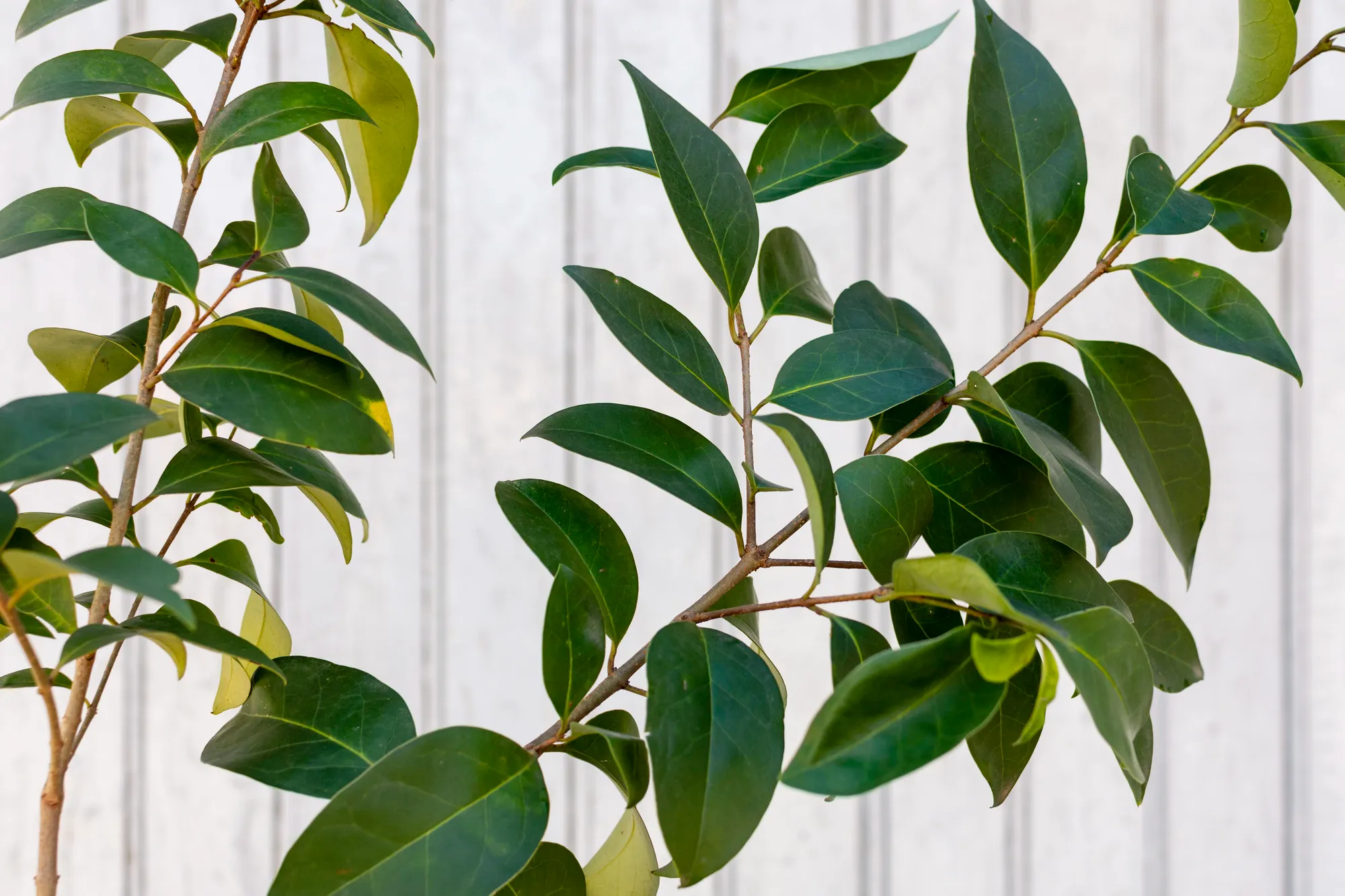
Known for its smooth, light-colored trunk, aerial roots, and shiny oval leaves, it’s a resilient and elegant choice for any interior.
It can be grown:
- as a decorative indoor plant, ideal for bright living rooms, or
- as a bonsai, symbolizing balance and inner strength.
🌿 Botanical profile
| Feature | Details |
|---|---|
| Scientific name | Ficus microcarpa var. retusa |
| Common name | Ficus retusa, Ficus bonsai |
| Family | Moraceae |
| Origin | Southeast Asia |
| Type | Tropical evergreen plant |
| Mature size | 30 cm – 2 m depending on pot size |
| Light | Bright, indirect light |
| Watering | Moderate, keep soil slightly moist |
| Temperature | 18–25 °C (64–77 °F) |
| Humidity | Medium to high |
| Toxicity | Sap may irritate sensitive skin |
☀️ Light and placement
Place your Ficus retusa in a bright, well-lit room, but avoid harsh direct sunlight that can burn its leaves.
A south-east or east-facing window is ideal.
💡 Tip: rotate the pot a quarter turn every week for balanced growth.
Avoid cold drafts or heaters — dry air leads to yellowing and leaf drop.
💧 Watering and humidity
Water only when the top inch (2–3 cm) of soil feels dry.
Use soft or filtered water, never cold tap water.
In summer, water 2–3 times per week; in winter, once is often enough.
🚫 Overwatering is the #1 mistake — soggy soil suffocates roots and turns leaves yellow.
Maintain humidity around 50–60 % using a humidifier or a pebble tray under the pot.
🌱 Soil and repotting
The Ficus retusa prefers a light, draining mix that stays slightly moist but never compacted.
Recommended mix:
- 50 % potting soil,
- 25 % perlite or pumice,
- 25 % coarse sand or akadama.
Repot every 2–3 years in spring. Trim some roots and keep the plant shaded for a few days afterward.
🌾 Fertilization
Feed from March to September:
- Use a balanced liquid fertilizer (NPK 6-6-6) every 3 weeks.
- Reduce dosage by half in autumn.
- Skip feeding during winter dormancy.
💡 Tip: alternating mineral and organic fertilizers gives denser foliage and stronger roots.
✂️ Pruning and maintenance
Prune new shoots after they produce 6–8 leaves, leaving 2 per branch to encourage ramification.
Wipe leaves with a damp cloth to remove dust and enhance photosynthesis.
🧤 Caution: wear gloves — ficus sap can irritate the skin.
🌳 Growing Ficus retusa as a bonsai
Thanks to its vigor and flexibility, the Ficus retusa is one of the best beginner bonsai species.
Recommended bonsai mix
- 50 % akadama
- 25 % pumice
- 25 % light potting soil
Watering
- Keep evenly moist but not soggy.
- Never let water stagnate in the tray.
Shaping
- Pinch new growth regularly to maintain a compact silhouette.
- Use soft wire for shaping — check every 2 weeks to avoid marks.
Seasonal care
- Move outdoors in partial shade during summer.
- Bring indoors before temperatures drop below 15 °C / 59 °F.
- Mist frequently to maintain humidity.
🍃 Yellow leaves or leaf drop: common causes
| Symptom | Likely cause | Fix |
|---|---|---|
| Yellow soft leaves | Overwatering or dry air | Space out watering, increase humidity |
| Sudden leaf drop | Drafts or low light | Move to a stable, bright location |
| Sticky leaves | Scale insects or aphids | Wipe with soapy water or neem oil |
🍀 Symbolism
In many Asian cultures, the Ficus retusa symbolizes resilience, patience, and inner balance.
It’s a popular choice for meditation rooms and offices to promote calm focus and positive energy.
🛠️ Useful accessories
Keep your Ficus retusa thriving with:
Affiliate links – verified by Verdepedia.
⚠️ Mistakes to avoid
- Overwatering or leaving water in the tray.
- Full sun exposure through glass.
- Ignoring dust buildup on leaves.
- Pruning in winter.
- Using a pot without drainage holes.
🚨 Quick diagnostic guide
- Yellow leaves? Too much water or dry air.
- No new shoots? Low light or nutrient deficiency.
- Sticky residue? Insects (scale, aphids).
- Leaf tips drying? Air too dry or heat stress.
❓ Frequently asked questions
Q: My Ficus retusa is losing leaves — what should I do?
A: Reduce watering, move to bright indirect light, and increase humidity.
Q: Can I prune it in winter?
A: Wait for spring — cuts heal faster during active growth.
Q: Is Ficus retusa the same as Ficus microcarpa?
A: They’re closely related; retusa has larger leaves and a smoother trunk.
Q: Can it live outdoors?
A: Yes, during warm months in partial shade — bring it indoors below 15 °C (59 °F).