Monstera deliciosa care: watering, pruning, light and expert tips

🌿 Quick Summary:
- ☀️ Bright, indirect light for healthy split leaves.
- 💧 Moderate watering – let the top inch of soil dry.
- 🌡️ Ideal temperature: 18–28 °C (65–82 °F).
- ✂️ Prune lightly in spring to shape growth.
- 🪴 Repot every 2–3 years in well-draining soil.
🌿 About Monstera deliciosa
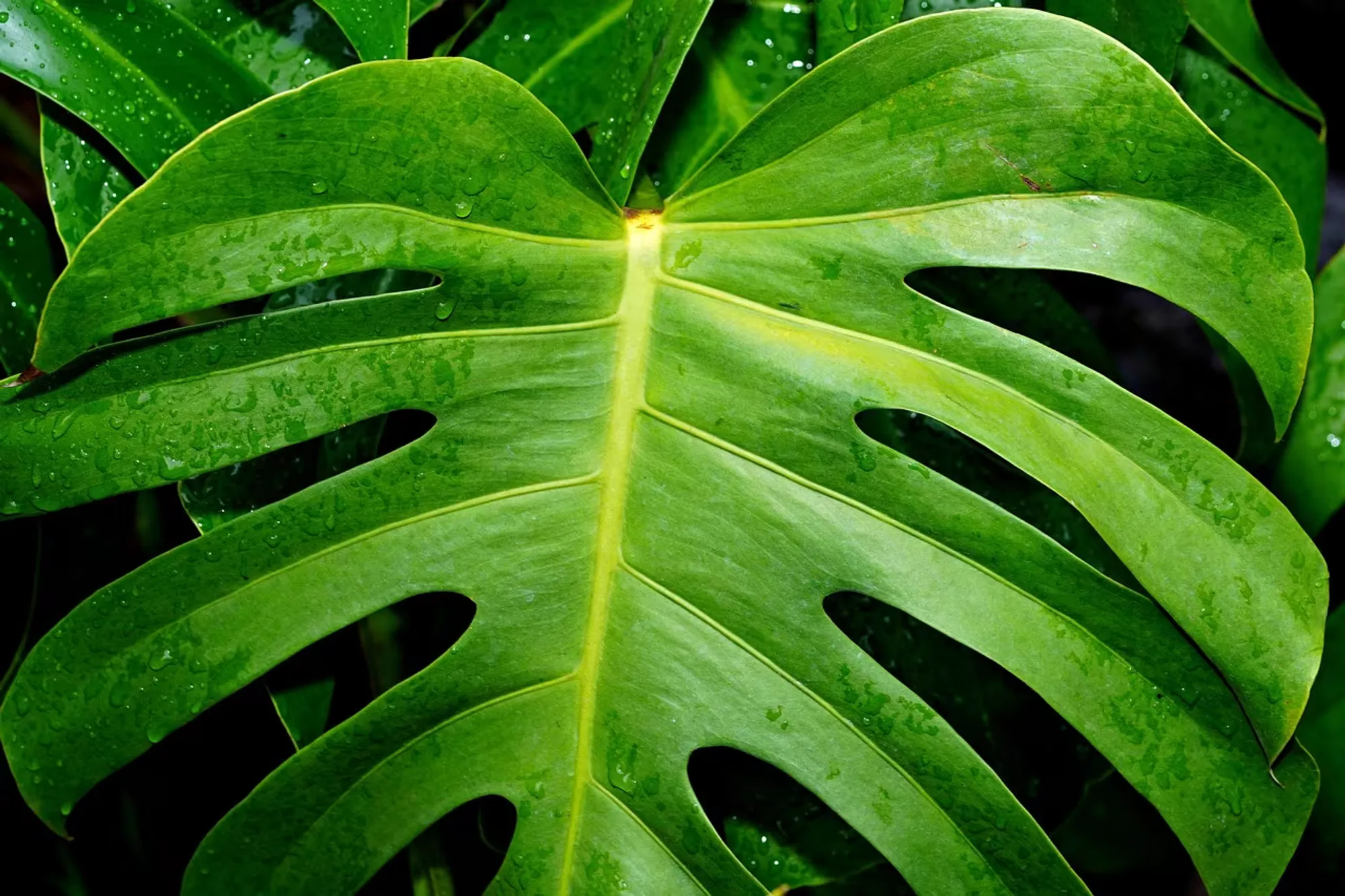
The Monstera deliciosa, also known as the Swiss cheese plant or split-leaf philodendron, is one of the most iconic tropical houseplants in the world.
Native to the rainforests of Central America, it’s prized for its large, perforated leaves and its ability to thrive indoors with minimal effort.
A true statement plant, it brings a lush, natural vibe to any room — perfect for urban jungles and interior design lovers.
🌿 Botanical profile
| Feature | Details |
|---|---|
| Scientific name | Monstera deliciosa |
| Common name | Swiss cheese plant |
| Family | Araceae |
| Origin | Central America |
| Type | Climbing tropical evergreen |
| Mature size | 1.5–3 m (5–10 ft) indoors |
| Light | Bright, indirect light |
| Watering | Moderate, once every 7–10 days |
| Temperature | 18–28 °C (65–82 °F) |
| Humidity | Medium to high (≥60%) |
| Toxicity | Slightly toxic to pets and children |
☀️ Light and placement
Place your Monstera near a bright window, but avoid direct sunlight that can scorch the leaves.
An east- or west-facing spot is ideal.
💡 Tip: if the new leaves grow without splits, your plant isn’t getting enough light.
Avoid dark corners; while Monstera can survive in low light, it will grow slower and lose its iconic perforations.
💧 Watering and humidity
The Monstera enjoys slightly moist soil but never soggy conditions.
- Water when the top inch (2–3 cm) feels dry.
- Use filtered or rainwater at room temperature.
- Always empty the saucer after watering.
- In winter, reduce frequency to every 12–15 days.
🚫 Too much water = yellow leaves and root rot.
💦 Too little humidity = dry, crispy edges.
💡 Pro tip: Mist the leaves regularly or place the pot on a pebble tray for added humidity.
🌱 Soil and repotting
Ideal mix:
- 50% universal potting soil
- 25% perlite or coco coir
- 25% orchid bark or pine bark
This light mix provides airflow and drainage for the plant’s aerial roots.
Repot every 2–3 years in spring, choosing a pot one size larger.
🌾 Fertilizing
From March to September:
- Feed with a balanced liquid fertilizer for green plants every 3 weeks.
- Stop fertilizing during winter dormancy.
💡 A nitrogen-rich fertilizer promotes bigger, greener leaves.
✂️ Pruning and maintenance
Prune lightly in spring to control size and encourage new growth.
Remove any yellowing or damaged leaves at the base.
Wipe the leaves with a soft damp cloth to remove dust and keep them shiny.
🪴 Aesthetic tip: train aerial roots onto a moss pole to help your Monstera climb and develop larger, fenestrated leaves.
🪴 Propagation
Propagating a Monstera is easy and rewarding:
- Cut a stem just below a node (ideally with an aerial root).
- Place it in a jar of water at room temperature.
- Change the water every 2–3 days.
- Transplant once roots reach 5–7 cm.
Roots usually form within 3–4 weeks.
🍃 Yellow leaves or brown edges: what to do
| Symptom | Likely cause | Solution |
|---|---|---|
| Yellow leaves | Overwatering | Let soil dry out more between waterings |
| Brown tips | Dry air | Mist more often or use a humidifier |
| Black spots | Standing water | Improve drainage and check pot holes |
| No new growth | Low light or no fertilizer | Move closer to light and feed regularly |
🍀 Symbolism and benefits
In many cultures, the Monstera deliciosa symbolizes growth, abundance, and vitality.
In feng shui, it’s considered a plant that brings positive, flowing energy and a feeling of prosperity.
It also helps purify indoor air, absorbing formaldehyde and benzene — perfect for bedrooms or workspaces.
🛠️ Useful accessories
Keep your Monstera thriving with:
(Affiliate links verified by Verdepedia.)
⚠️ Common mistakes
- Overwatering or leaving water in the saucer.
- Full sun exposure through glass.
- Ignoring humidity (causes brown edges).
- Never rotating the pot (uneven growth).
- Using a pot without drainage holes.
🚨 Quick diagnostic guide
| Symptom | Cause |
|---|---|
| Yellow leaves | Overwatering |
| Dry leaf edges | Air too dry |
| Slow growth | Low light or nutrient deficiency |
| Drooping stems | Waterlogged soil |
| No leaf splits | Insufficient light |
❓ Frequently asked questions
Q: Why are my Monstera leaves turning yellow?
A: Usually from overwatering. Let the soil dry between each watering.
Q: How can I make my Monstera grow faster?
A: Increase light exposure, maintain humidity, and fertilize monthly.
Q: Can I cut aerial roots?
A: You can trim long ones, but guiding them to a moss pole is better for growth.
Q: Can I put my Monstera outside?
A: Yes, in summer in shaded areas, as long as temperatures stay above 15 °C (59 °F).